
jueves, 22 de noviembre de 2012

Mathematics
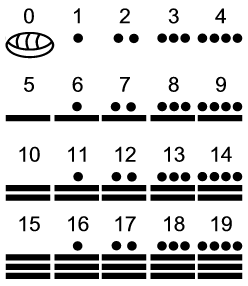
Like other Mesoamerican civilizations, the Maya used a
numbering system to base 20 (vigesimal) and base 5. Also the Preclassic Maya
(or their Olmec predecessors) independently developed the concept of zero
around the year 36 BC.
Produced extremely accurate astronomical observations,
their diagrams movements of the moon and planets are equal or superior to those
of any other civilization working eye. Also, like other Mesoamerican
civilizations, the Maya discovered an accurate measure of the length of the
solar year, far more accurate than that used in Europe with the Gregorian
calendar.


Architecture
During
this period of Maya culture, the centers of the religious, commercial and
bureaucratic grew into incredible cities as the Preclassic El Mirador, Tikal
most classic of classic post and Chichen Itza and Uxmal. Because of their many
similarities, and their stylistic differences, the remains of Mayan
architecture are an important key to understanding the evolution of their
ancient civilization.
The Mayans were a sedentary village that was located geographically in the territory of southern México Guatemala and other parts of Central America. It is especially important the ir presence and influence in the territories of present Guatemala and Belize, with a rich history of over 3,000 years. The ancient Maya were one of the pre-Columbian Mesoamerican cultures.
The Maya built great temples and cities as Nakbé, San Bartolo (in northern Petén), Tikal, Palenque, Copán, Calakmul and Uaxactún, Piedras Negras. The monuments of the most notable are the Mayan pyramids they built in their religious centers.


We
chose this culture because it is one of the most powerful and in our opinion
very important, interesting and full of mysteries.
This
research aims to investigate various sources of information in order to compare
information and to find one goal which is to obtain the most accurate possible
in order to have a comprehensive understanding of what the Mayans were in his
day and how it has transcended all that to this day.
The
Mayan culture was alive for thousands of years before the Spanish conquest,
during the Spanish conquest, during the colonial period and after the colony is
alive now.
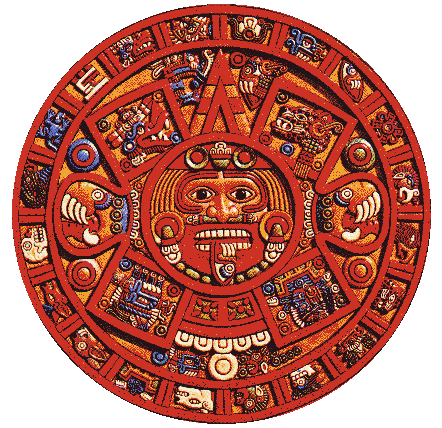
The Maya is a Mesoamerican civilization, noted for the only known fully developed written language of the pre-Columbian Americas, as well as for its art, architecture, and mathematical and astronomical systems. Initially established during the Pre-Classic period (c. 2000 BC to AD 250), according to the Mesoamerican chronology, many Maya cities reached their highest state of development during the Classic period (c. AD 250 to 900), and continued throughout the Post-Classic period until the arrival of the Spanish.
Suscribirse a:
Comentarios (Atom)